

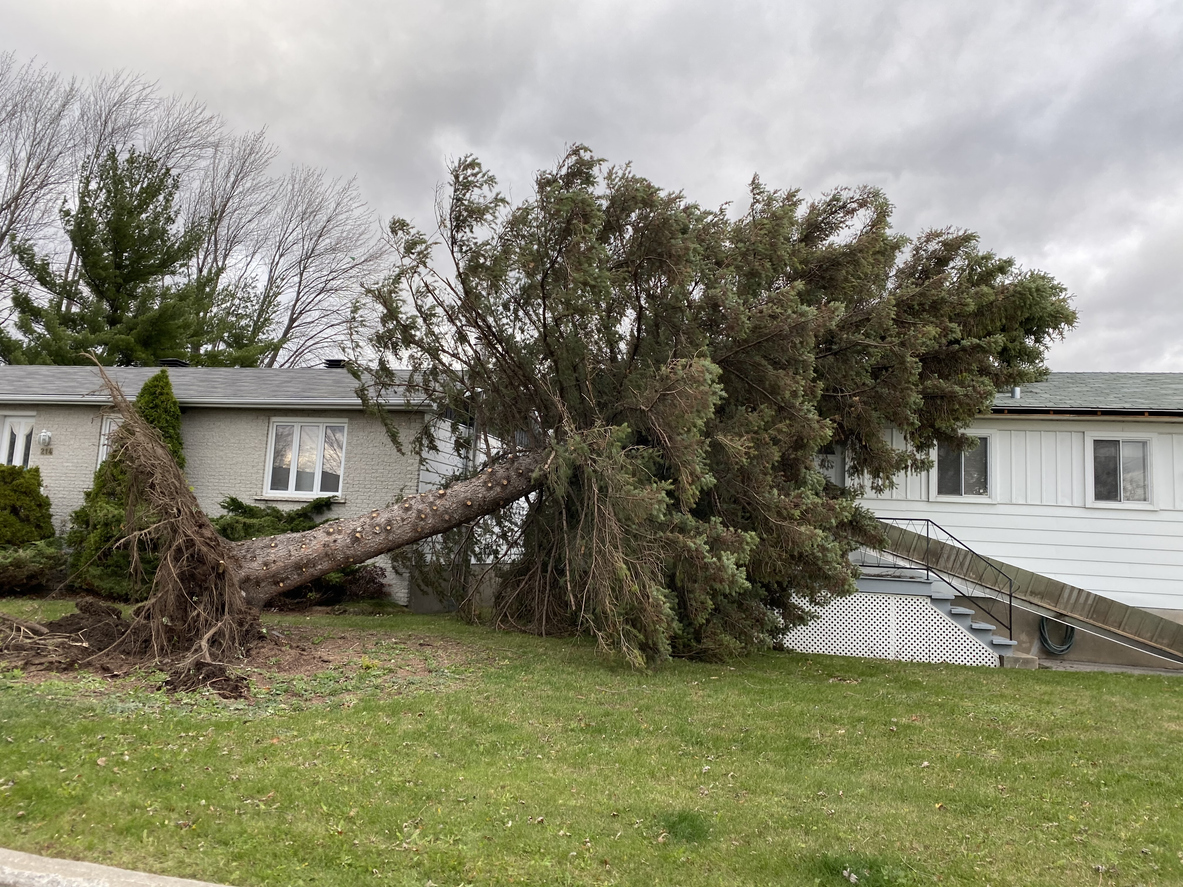
April weather clearly missed the April Fools memo; because when storms hit this time of year, they’re anything but a joke. Sudden, intense systems cause a variety of storm damage; flooding basements in under an hour, toppling trees, and sending large branches crashing onto your roof.
In moments like these, what you do within the first hour can make a meaningful difference. Taking the right steps early can help limit damage, simplify the insurance claims process, and potentially save you from unexpected out-of-pocket expenses.
With that in mind, this guide will walk you through the key actions to take in the first 60 minutes before or during a storm. These practical, easy-to-follow steps are designed to help you stay safe, protect your home, and reduce the likelihood of costly surprises down the line.
A Skimmable Overview
- Make sure you, your pets, and loved ones stay inside and well away from hazards until the storm has fully passed.
- Go through your home and shut off utilities if you see flooding, sparks, or smell gas in the air.
- Keep a phone on you to document all visible damage, and to be sure you can contact someone in an emergency situation.
- Tarp or cover exposed areas like broken windows or roof openings to prevent additional water intrusion and damage.
- When the storm is over, contact a licensed restoration company and your insurance carrier as soon as you are able.
The First 60 Minutes Sets the Tone for Everything That Follows
It’s completely normal for stress and anxiety to rise when storm damage feels imminent or has already happened. It can be overwhelming to process a flooded basement or a roof that’s suddenly been compromised after a severe storm.
That’s exactly why having a clear, step-by-step plan—especially for the first 60 minutes—matters. When you know what actions to take ahead of time, you can move quickly and confidently without the added pressure of figuring things out in the moment. A well-prepared plan allows you to stay focused, act efficiently, and reduce panic during an already stressful situation.
Step 1: Don’t Go Outside Until It’s Truly Over
Before you roll your eyes, we know not going outside seems like a very obvious thing to do. However, when adrenaline is running high, even the most logical individual will not always be able to think clearly through the situation.
So, try to take a breath and remain indoors. April storms in Southeast Michigan can cycle through multiple waves, and there are hazards you may not see until it’s too late. For example, downed power lines are nearly invisible in the dark, and heavy rain can cause slips and falls, making going outside extremely risky.
Only once the storm has fully passed should a quick visual assessment be done, starting from the inside. Look through windows for obvious structural damage, fallen trees, or standing water. If you’re in a commercial property, account for all staff and clients before assessing anything else. Safety comes before the building checks.
Step 2: Shut Off Utilities If There’s Any Doubt
While most people understand that water and electricity are a dangerous combination, it’s not always top of mind in a high-stress, fast-moving situation.
What you do next is critical, especially if you notice flooding or significant moisture near outlets, appliances, or your home’s electrical panel. In these cases, turn off power to the affected areas, or shut off the main power entirely depending on the severity of the situation. If you detect the smell of gas, locate the outdoor shutoff valve near your meter and turn it off immediately.
If you’re unsure where these shutoff points are and you’re not currently dealing with a storm, take time to locate them now so you’re prepared in the future. It’s also important to avoid using generators, grills, or any fuel-burning equipment indoors during a storm. Carbon monoxide buildup is a leading cause of storm-related fatalities and it can occur much faster than most people realize.
Step 3: Document Everything Before You Move Anything
Before moving on, make sure you have a charged phone and, ideally, a backup power bank. Your phone is one of the most valuable tools you have during and after a storm—not just for contacting others, but for documenting damage.
Before removing damaged items or beginning cleanup, take time to thoroughly capture the condition of your home. Start by recording a full video walkthrough, then follow up with photos of specific areas of concern.
When documenting, focus on:
- The exterior of the property, including the roof, siding, gutters, and any fallen trees or debris
- Interior spaces, especially rooms with visible water intrusion, structural damage, or broken windows
- Water levels in basements or lower areas
- Damaged appliances, HVAC systems, or personal belongings
If possible, try to timestamp your photos, or send them to yourself by email or text so there’s a record. Insurance adjusters rely heavily on clear, detailed documentation, so the more thorough you are, the stronger your position will be during the claims process.
Step 4: Stop Additional Damage Where You Can
Once you’ve documented the damage, the next priority is to take reasonable steps to prevent it from getting worse. Insurance providers typically expect homeowners to make a good-faith effort to limit further damage where it’s safe to do so.
Here are some practical actions you can take:
- Cover broken windows or roof openings with secured plastic sheeting or a tarp, making sure it’s properly weighed down to withstand wind
- Move dry belongings out of affected areas, if it’s safe to do so
- Use towels or buckets to manage minor water intrusion until professional help arrives
- Shut off your home’s water supply if a pipe has burst or appears at risk
It’s also important to avoid running standard household fans over heavily saturated materials. Without proper equipment, this can push moisture deeper into walls or subfloors, creating ideal conditions for mold growth within 24 to 48 hours.
Step 5: Call Your Insurance Carrier and a Restoration Company
Finally, it’s time to make a few important calls. If possible, reach out to both your insurance provider and a restoration company within the first hour, or first thing in the morning if the storm occurs overnight.
When contacting your insurer, have your policy number ready and provide a clear description of the damage. Ask about their emergency service process, the expected timeline for an adjuster, and be sure to document who you spoke with, along with the date and time of the call. Many providers will also issue a reference number for your claim.
At the same time, connect with a trusted restoration company. A qualified team can respond quickly—often 24/7—to begin emergency mitigation and document conditions upon arrival. This immediate response not only limits further damage but also strengthens your insurance claim by establishing a clear record of the loss.
Staying Level-Headed When Things Feel Uncertain
Remaining calm during a storm—especially in the first 60 minutes—can feel incredibly challenging. The uncertainty and urgency of the situation often make it difficult to think clearly.
However, having a general understanding of what steps to take can make a meaningful difference. With a plan in place, you’re better equipped to act quickly, stay safe, and reduce potential complications with insurance. Ultimately, these actions help position you to manage the storm damage more effectively and get the restoration support you need as soon as possible.
We’re Here When You Need Us
If you need help and have been affected by storm damage, BROADCO offers inspections and assessments at no cost. Our family-owned, locally operated property restoration company has been helping homeowners in Southeast Michigan and Sarasota, Florida, for over 25 years. Our team is readily available 24 hours a day for emergency storm response, so you don’t ever have to wait. Call us at 877-450-6250 or visit our website to get started.